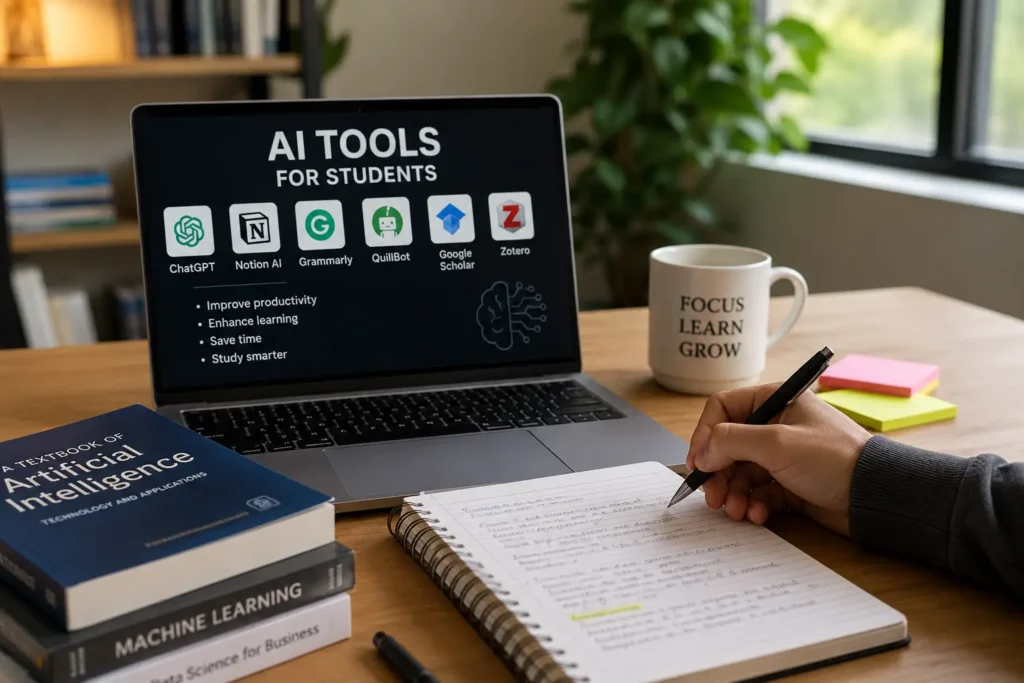
Artificial intelligence has become a valuable learning tool for students. From explaining difficult concepts to helping organize study materials, AI can make homework faster and more effective. However, many students wonder where the line is between using AI responsibly and cheating.
The good news is that AI can be used ethically to improve learning without violating school policies. The key is to use AI as a study assistant rather than as a replacement for your own thinking and effort.
In this guide, you’ll learn how to use AI for homework without cheating, along with practical tips, best practices, and common mistakes to avoid.
What Does It Mean to Use AI Responsibly?
Using AI responsibly means using it to support your learning instead of having it complete your work for you. AI should help you understand concepts, improve your skills, and solve problems independently.
Responsible AI use includes:
- Learning difficult concepts
- Getting step-by-step explanations
- Improving grammar and writing
- Creating study notes
- Generating practice questions
- Organizing study schedules
Using AI to learn is very different from copying AI-generated answers and submitting them as your own.
Why Students Use AI for Homework
AI tools help students save time while improving their understanding of academic subjects.
Some common uses include:
- Explaining difficult lessons
- Solving math problems step by step
- Summarizing textbook chapters
- Improving essays
- Brainstorming project ideas
- Preparing for exams
When used correctly, AI becomes a personal tutor that is available anytime.
Best Ways to Use AI for Homework
Ask AI to Explain Concepts
Instead of asking for the final answer, ask AI to explain how a topic works.
Example:
Instead of:
“Give me the answer to this biology question.”
Ask:
“Can you explain photosynthesis in simple terms?”
This approach helps you understand the material.
Request Step-by-Step Solutions
For subjects like mathematics, physics, or chemistry, ask AI to show every step.
This helps you:
- Learn problem-solving methods
- Identify mistakes
- Solve similar questions independently
Create Study Notes
AI can summarize long chapters into short, easy-to-review notes.
Use AI to:
- Highlight key points
- Create revision summaries
- Organize class notes
Always review and personalize the notes afterward.
Practice with AI-Generated Questions
Ask AI to create quizzes or practice problems based on your textbook or class topics.
This is one of the best ways to prepare for exams.
Improve Your Writing
Writing assistants can help:
- Correct grammar
- Improve sentence structure
- Suggest better vocabulary
- Increase clarity
However, the ideas and final content should still reflect your own work.
Use AI for Brainstorming
If you’re unsure how to start an essay or project, AI can suggest ideas, outlines, or research directions.
You should still develop the final work yourself.
Verify Information
AI can occasionally make mistakes or provide outdated information.
Always verify important facts using:
- Textbooks
- Academic journals
- Teacher-provided materials
- Trusted educational websites
Fact-checking improves the accuracy of your assignments.
What Counts as Cheating?
Using AI becomes unethical when students present AI-generated work as entirely their own without permission or acknowledgment where required.
Examples include:
- Copying AI-generated essays without editing
- Submitting AI-written assignments as original work
- Using AI during exams when it’s not allowed
- Asking AI to complete graded assignments without understanding them
- Ignoring school policies on AI use
Many schools now have specific guidelines about acceptable AI use, so it’s important to follow your teacher’s instructions.
Benefits of Using AI Responsibly
When used ethically, AI can provide many educational benefits.
- Better Understanding: AI explains difficult topics in simple language.
- Save Time: Students spend less time searching for information.
- Improve Writing: Grammar and clarity improve with AI feedback.
- Increase Confidence: Practice questions and explanations build stronger knowledge.
- Personalized Learning: Students receive help based on their own learning needs.
Common Mistakes Students Should Avoid
Avoid these habits when using AI:
- Copying answers without reading them
- Depending on AI for every assignment
- Skipping independent practice
- Believing every AI response is correct
- Ignoring school or university AI policies
Using AI responsibly helps you develop stronger critical-thinking and problem-solving skills.
Best AI Tools for Homework Support
Several AI tools can support learning without encouraging cheating.
- ChatGPT: Great for explanations, study notes, and homework guidance.
- Google Gemini: Useful for research, brainstorming, and topic summaries.
- Microsoft Copilot: Helps with writing, presentations, and productivity.
- Grammarly: Improves grammar, spelling, and writing clarity.
- Photomath: Provides step-by-step math explanations.
- Khan Academy: Offers free lessons, videos, and practice exercises.
- Quizlet: Creates flashcards and quizzes for exam preparation.
Tips for Teachers and Parents
Teachers and parents can encourage responsible AI use by:
- Teaching students how to verify information
- Encouraging critical thinking
- Discussing ethical AI use
- Assigning work that emphasizes understanding
- Reviewing school AI policies together
Open communication helps students develop healthy learning habits.
Future of AI in Education
Artificial intelligence will continue playing an important role in education. Future AI systems may provide:
- Personalized tutors
- Adaptive learning paths
- Real-time feedback
- Interactive lessons
- Intelligent study recommendations
- Enhanced accessibility for learners
As AI evolves, responsible use will remain essential for maintaining academic integrity and developing genuine knowledge.
Final Thoughts
Learning how to use AI for homework without cheating is an important skill for today’s students. AI should be viewed as a learning partner that helps explain concepts, improve writing, generate study materials, and prepare for exams—not as a shortcut for avoiding work.
By using AI ethically, verifying information, and completing assignments with your own understanding, you can improve your academic performance while maintaining honesty and integrity.
Frequently Asked Questions (FAQs)
- Is using AI for homework considered cheating?
Not necessarily. Using AI to explain concepts, improve writing, or create study materials is generally acceptable if it follows your school’s policies. Submitting AI-generated work as your own may violate academic integrity rules. - How can students use AI responsibly?
Students should use AI to understand concepts, generate practice questions, improve writing, organize notes, and verify learning rather than simply copying answers. - Can AI improve learning?
Yes. AI can help explain difficult topics, provide personalized study support, create revision materials, and improve productivity when used responsibly. - Should students always trust AI answers?
No. AI can make mistakes, so students should verify important information using textbooks, trusted educational resources, or guidance from their teachers.