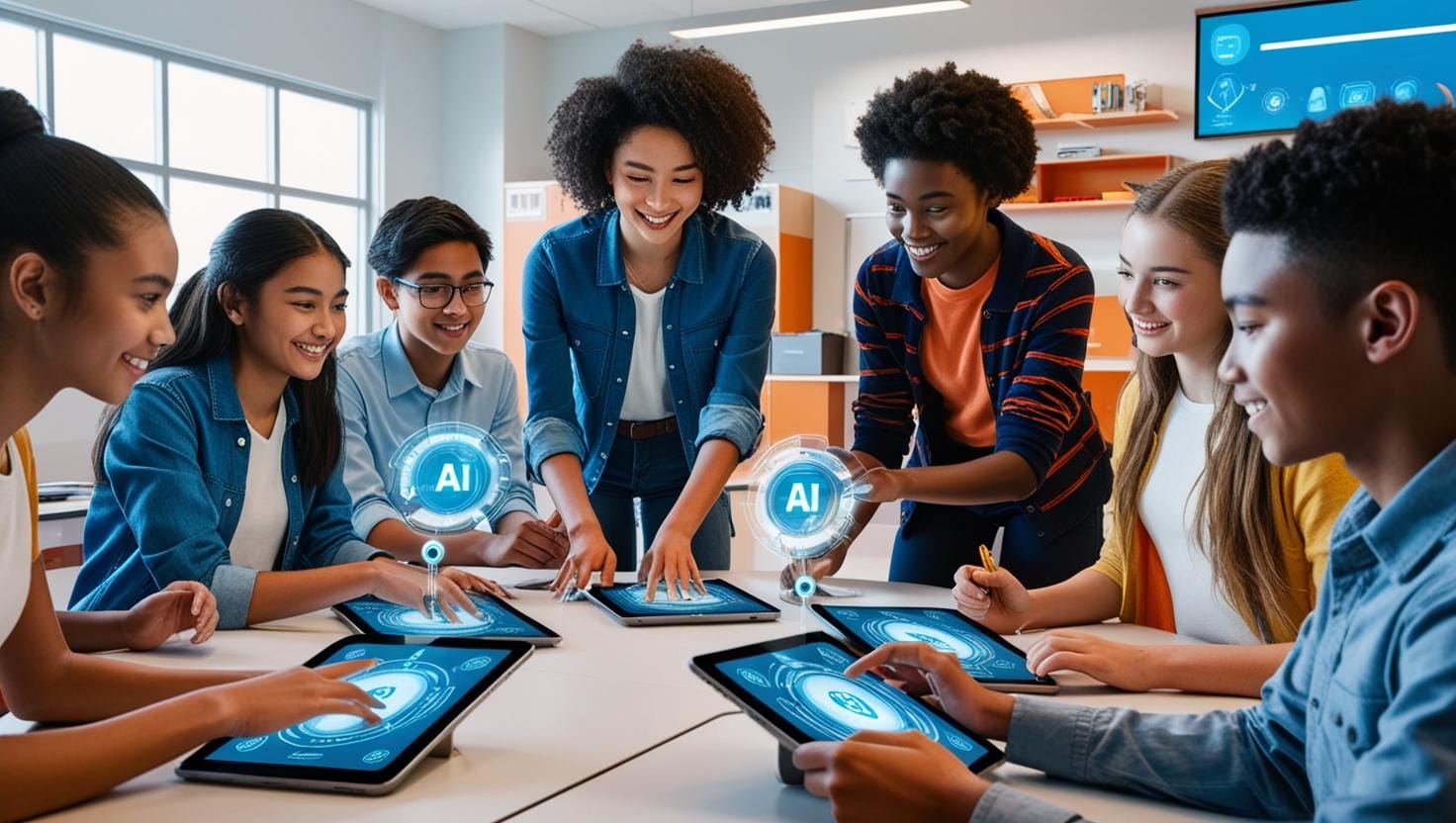
AI tutors are changing how students learn difficult subjects in 2026 by providing personalised explanations, instant feedback, and interactive learning support. Unlike traditional study methods where students follow the same pace as everyone else, AI-powered tutors adapt to individual learning needs and provide guidance based on a student’s strengths and weaknesses. Research shows that personalised AI tutoring systems can improve learning outcomes by adjusting practice difficulty and providing targeted support.
AI tutors explain complex topics in simpler ways by breaking difficult concepts into smaller, easier-to-understand steps. Students struggling with subjects like mathematics, physics, chemistry, and programming can ask questions repeatedly until they fully understand the topic. Instead of receiving only a final answer, AI tutors can provide explanations, examples, and alternative methods that match the student’s learning style.
Personalised learning helps students study at their own pace by analysing how they interact with learning materials. AI systems can identify knowledge gaps and recommend specific exercises or explanations to improve weak areas. This adaptive approach helps students avoid spending too much time on topics they already understand while focusing more on areas where they need improvement.
AI tutors provide instant feedback that improves problem-solving skills because students no longer need to wait for teacher responses or scheduled tutoring sessions. When solving homework questions or practising exam problems, students can receive immediate guidance about mistakes and learn the correct approach. This continuous feedback loop helps build confidence and encourages active learning.
AI-powered practice sessions make difficult subjects easier to master by creating personalised quizzes, examples, and exercises. Instead of using the same practice questions for every student, AI tools can adjust difficulty levels based on performance. Studies on adaptive AI tutoring systems show that personalised practice sequences can improve student performance by matching challenges with current ability levels.
AI tutors support visual and interactive learning methods by combining text explanations with diagrams, examples, simulations, and step-by-step demonstrations. This is especially useful for subjects where students struggle with abstract ideas. For example, a physics student can receive simplified explanations of complex formulas, while a programming student can get guidance on debugging code.
AI tutors help students overcome learning barriers outside the classroom because they are available anytime and anywhere. Students can review lessons after school, prepare for exams late at night, or get additional practice without depending only on classroom hours. This accessibility makes personalised learning available to more students who may not have access to private tutoring.
AI tutors work best when combined with human teaching support rather than replacing teachers completely. Human educators provide emotional support, motivation, and deeper understanding of student behaviour, while AI provides speed, personalisation, and continuous practice. Research on hybrid human-AI tutoring suggests that combining both approaches can create stronger learning outcomes than AI-only systems.
Students should use AI tutors as learning partners instead of answer generators. Simply copying AI responses may reduce critical thinking and limit skill development. Educational experts recommend using AI to ask questions, practise concepts, receive feedback, and improve understanding rather than relying on it to complete assignments without learning.
Conclusion shows that AI tutors are making difficult subjects easier to understand in 2026 by providing personalised explanations, adaptive practice, and instant academic support. These tools help students learn faster, improve confidence, and study more effectively. When used responsibly alongside traditional learning methods, AI tutors can become powerful assistants that support better academic performance and deeper understanding.